


|
ADF-SERIALS ARMY & DSTO A50 Aerosonde Mk.2 & |
||||||||||||||||||||||||||||||
|
|
||||||||||||||||||||||||||||||
|
Aerosonde Image Gallery ScanEagle Gallery |
||||||||||||||||||||||||||||||
|
The ADF has used a variety of other UAVs (such as the RQ-7B Shadow 200, Wasp AE, Puma AE, and the MQ-4C Triton with A49 prefix, and MQ-28 Ghost Bat with A65 prefix) that use different "A" series prefixes or sometimes no visible serial numbers, particularly for smaller hand-launched systems.
The A50 series was specifically for the smaller, locally-developed, or commercially sourced maritime/tactical UAVs.The ADF has primarily used the A50 serial prefix for two specific Unmanned Aerial System (UAS) types while the prefix A50 is allocated to Unmanned Aerial Vehicles in general within the Australian Defence Force (ADF) serial system.
Aerosonde Mk.2
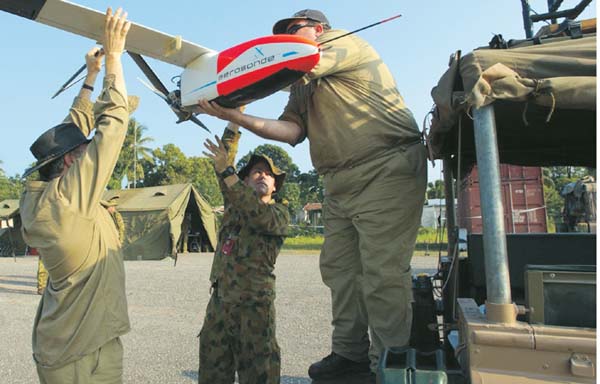
The Australian designed and made Aerosonde UAV was first employed by the Defence Science & Technology Organsiation (DSTO) in its NERVANA tactical UAV experimentation programme for various UAV and Payload trials. During August 2003, four Aerosonde UAVs were used for the Operation ANODE peace restoration mission to the Solomon Islands and this was the first use of drone technology by the Australian Army.
The deployed UAV's were drawn from the DSTO fleet for use in day and night surveillance missions, as well as acting as communications relays for ground-based forces in remote areas of the islands.
The Army UAV detachment was based at Henderson Airfield near Honiara on Guadalcanal Island with four aircraft which were operated by a fifteen person detachment consisting of personnel from Brisbane-based 131 Surveillance and Target Acquisition Battery and 161 Recce Sqn. In addition, three RAAF Image Analysts are also deployed along with two scientists from DSTO and specialists from Aerosonde.
This was the first ever Australian operational deployment of UAVs and proved extremely useful in gaining experience in the operation and deployment of reconnaissance UAV capabilities.
The Aerosonde drones were able to produce useful imagery of some of the more remote areas and less accessible villages of the Solomons as well as having a psychological deterrent effect.
This was also the first time that Aerosonde drones were used in an operational military role by any operator worldwide.
Boeing Insitu ScanEagle The ScanEagle was introduced into ADF service in 2006, with Boeing Australia Limited awarded a contract to provide UAV services in Iraq. By April 2007, it had logged over 1,000 combat flight hours supporting Australian Army operations in southern Iraq with the Overwatch Battle Group (West)-2, completing 172 sorties in less than five months.
Capabilities
The ScanEagle was part of LAND 129 Phase 3, with Insitu Pacific supplying the Integrator platform (a successor to ScanEagle) and associated systems. The Royal Australian Navy has also tested ScanEagle with advanced systems like Sentient Vision Systems' ViDAR for broad area maritime surveillance. |
||||||||||||||||||||||||||||||
|
||||||||||||||||||||||||||||||
 |
||||||||||||||||||||||||||||||
|
The author of this page is Brendan Cowan Source: defence.gov.au, http://spacewar.com/reports/AAI_Corp_Acquires_Leading_Australian_UAV_Developer_Aerosonde.html , http://defence-today.com.au/australian-army-builds-drone-air-force , http://australianaviation.com.au/2018/04/unmanned-systems-finally-taking-off-in-adf-service/ , https://flightglobal.com/news/articles/aerosonde-in-military-role-169418/ , https://nautilus.org/publications/books/australian-forces-abroad/solomon-islands/unmanned-aerial-vehicles-uavs/ , Emails: Dave Richardson. Converted to CMS 26th August 2025 Updated 27 November 2025 |
||||||||||||||||||||||||||||||
