


|
RNAS and RAF Aircraft carried on Royal Australian Navy Ships 1917-1919 |
||||||||||||||||||||||||||||||||||||||||||||||||||||||||||||||||||||||||||||||||||||||||||||||||||||||||||||||||||||||||||||||||||||||||||||||||||||||||||||||||||
|
|
||||||||||||||||||||||||||||||||||||||||||||||||||||||||||||||||||||||||||||||||||||||||||||||||||||||||||||||||||||||||||||||||||||||||||||||||||||||||||||||||||
| Introductory notes:
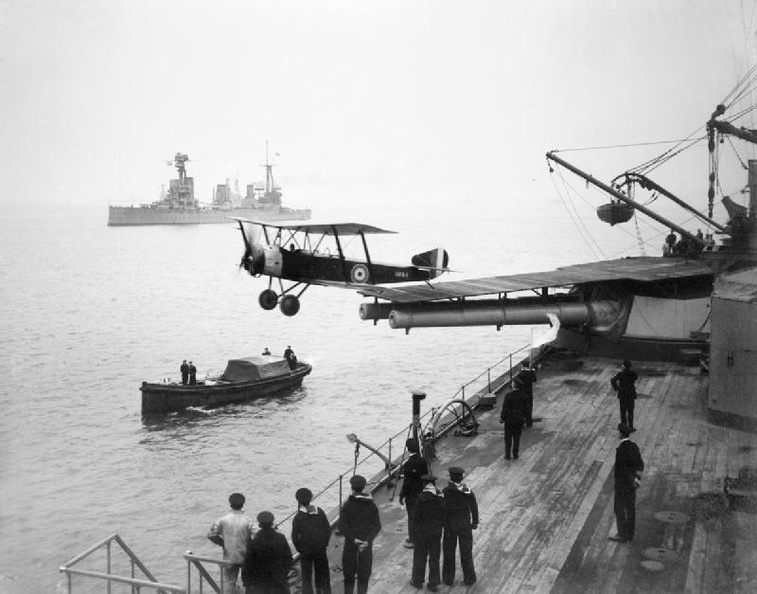
1. During the last two years of World War 1, three RAN ships, the battle-cruiser HMAS AUSTRALIA and the light cruisers HMAS MELBOURNE and HMAS SYDNEY, worked as units of the Royal Navy’s Grand Fleet in the North Sea. All three ships carried aircraft at various times. HMAS AUSTRALIA had extendible 30 ft (9.144 metres) flying off decks fitted over ‘P’ and ‘Q’ turrets and could generally carry one fighter, typically a Sopwith Pup or Sopwith 2F.1 Camel, and one reconnaissance aircraft, a Sopwith 1 Strutter modified as a ‘Ship Strutter’. The two cruisers were fitted with a revolving flying off deck mounted behind but extending partly over ‘A’ turret and usually carried a fighter, either a Sopwith Pup or a Sopwith 2F.1 Camel. 2. HMAS SYDNEY, under the command of a very aviation-minded captain, Captain J.S Dumaresq, RN, was a pioneer in the launching of land aircraft from revolving flying off decks on cruisers. These decks measured about 16 ft (4.9 metres) from the aircraft wheels to the leading edge so wind over the deck was vital for safe launching. A revolving platform could be turned to provide wind over the deck without the ship turning out of line. 3. The aircraft carried were not permanently allocated to the ship but were loaned for varying, usually short, periods from a nearby air station. Until 31 March 1918 they were operated by the Royal Naval Air Service (RNAS) and from 1 April 1918, when the Royal Air Force was formed from the Royal Flying Corps (RFC) and the RNAS by the RAF. Pilots appear to have been appointed to the respective ships as they flew various different aircraft. 4. The only other RAN ship recorded as carrying an aircraft was the cruiser HMAS BRISBANE which embarked a Sopwith Baby floatplane in the Indian Ocean for a short period in 1917 to assist in the hunt for the German commerce raider WOLF. 5. Records of movements of aircraft to and from ships are sparse and, where not noted in available log books or aircrew log books, are taken from surviving weekly returns from ships and air stations. These dates are recorded below with the abbreviation w/e for week ending. The abbreviation ‘@’ indicates a last known date of allocation. 6. The aircraft were removed from the RAN ships in early 1919 before they returned to Australia. The Sopwith 2F.1 was withdrawn from service in 1919 and this ended the era of revolving flying off decks on cruisers. During 1920, Commodore J.S. Dumaresq, RN, by now RAN Fleet Commander, persuaded the Naval Board that HMAS AUSTRALIA and HMAS MELBOURNE could each usefully carry an Avro 504 seaplane from the AFC. For a variety of reasons this trial failed and the RAN ships then carried no aircraft until after the arrival of six Fairey IIIDs in late 1921. Details of these later aircraft will be found elsewhere on this site. |
||||||||||||||||||||||||||||||||||||||||||||||||||||||||||||||||||||||||||||||||||||||||||||||||||||||||||||||||||||||||||||||||||||||||||||||||||||||||||||||||||
|
Image Gallery Link Coming Soon |
||||||||||||||||||||||||||||||||||||||||||||||||||||||||||||||||||||||||||||||||||||||||||||||||||||||||||||||||||||||||||||||||||||||||||||||||||||||||||||||||||
|
||||||||||||||||||||||||||||||||||||||||||||||||||||||||||||||||||||||||||||||||||||||||||||||||||||||||||||||||||||||||||||||||||||||||||||||||||||||||||||||||||
|
The author of this page is Joe Barr Sources: “Sopwith – The Man and His Aircraft” by Bruce Robertson (Air Review Ltd, Letchworth 1970); “Seagulls Cruisers and Catapults” by Ray Jones (Pelorus Publications, Hobart, 1989); “Royal Navy Shipboard Aircraft Developments 1912 – 1931” by Dick Cronin (Air-Britain (Historians) Ltd, Tonbridge, 1990); “Royal Navy Aircraft Serials and Units 1911-1919” by Ray Sturtivant and Gordon Page (Air Britain (Historians) Ltd, Tonbridge 1992); “The Camel File” by Ray Sturtivant & Gordon Page (Air-Britain (Historians) Ltd, Tonbridge, 1993); “The Sopwith Pup” by J.M. Bruce, Gordon Page & Ray Sturtivant (Air-Britain (Historians) Ltd, Tonbridge, 2002); Emails: Brendan Cowan, Martin Edwards, Kimberley Dunstan. Converted to CMS 5th September 2025 Updated 07th December 2018 |